
Understanding Watch Water Resistance: What Does It Mean?
Understanding the concept of watch water resistance is key to ensuring your timepiece remains in optimal condition, especially if you’re planning for adventures involving water. Water resistance refers to a watch’s ability to withstand water pressure without allowing water to enter the case. It is typically expressed in meters, which indicate the level of pressure the watch has been tested to handle rather than the actual depth at which it can be worn underwater.
Most watches, even those labeled as “water-resistant,” perform best when kept away from water altogether. The term “waterproof” implies an absolute resistance to water ingress, which is theoretically impossible given that all materials have thresholds. Water resistance, on the other hand, is a more practical term and usually involves complex engineering to ensure seals and materials can withstand specific pressures of water. That means your trusty wrist companion is designed to survive rain splashes or a quick dip, but not necessarily prolonged swimming sessions unless specifically rated for such activities, such as diving watches.
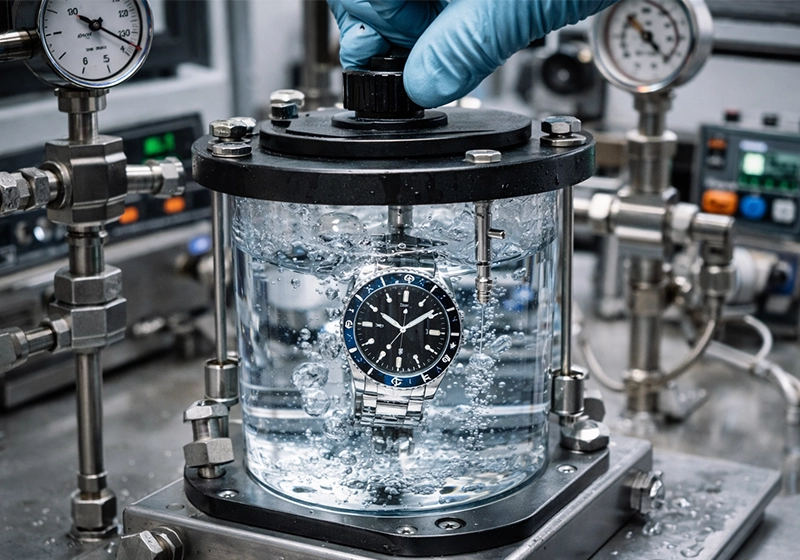
Watch waterproof testing involves rigorous processes to validate how well a watch can cope under different water pressures. This is typically done through an array of checks, using air pressure, to see how well the seals and gaskets hold up. Whether preparing for a beach visit or simply protecting an everyday wear piece, understanding these ratings helps make informed decisions and maintain your watch’s integrity. Watch service centers offer these tests to ensure your timepiece is up to its expected resistance standards.
Always remember the specific water resistance rating of the watch you’re wearing before you let your watch near water. Understanding watch water resistance not only provides peace of mind but also preserves the lifespan of your prized possession. Checking in with a professional watch repair service can also assure that your watch withstands water exposure according to its design, supporting you through all your adventures without a hitch.
How Watch Waterproof Ratings Work
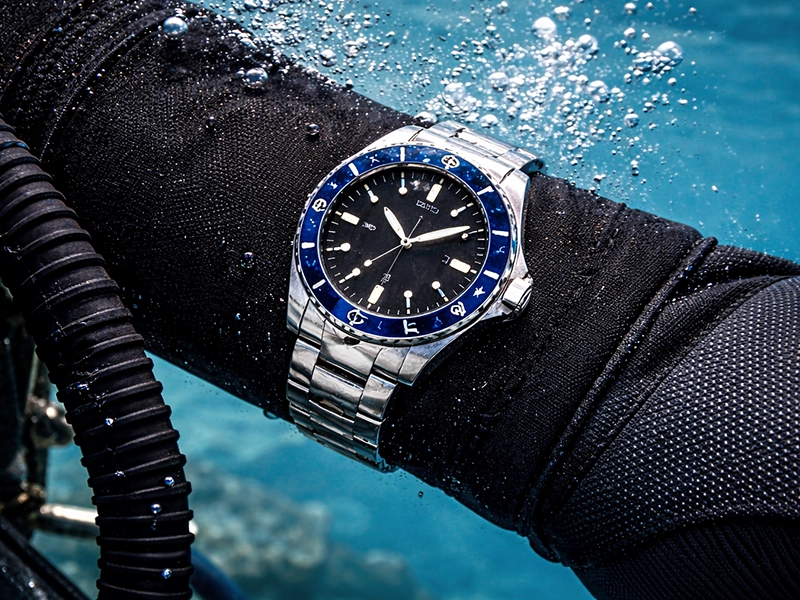
It’s important to match your normal activities to the water-resistant rating for the watch you will wear daily. Many watches have little to no water resistance, especially costume dress watches, antique pieces, or fashion watches. Many modern watches have a 30m rating which is protection if you are staying dry and only risk the occasional splash from the sink. If you routinely swim in the ocean or do laps in the pool, you’ll want a watch with a higher rating that can withstand total immersion. Most luxury watches have 50m or higher ratings. Luxury diving watches start at 100m and go up.
Some common ratings are:
Cartier: Many models within the Ballon Bleu and Tank collections feature 3ATM, emphasizing luxury, design, and slim profiles.
Breguet: High-end models from this brand often have a 30m rating.
Longines: Various dress watches, such as those in the Flagship or La Grande Classique lines, are rated for 30m.
Omega: While known for diving watches, many De Ville and some Constellation models are 3ATM/30m, suitable for dressier, non-aquatic occasions. The Seamaster is 300m.
Rolex watches water resistance ratings:
Standard Oyster models (Datejust, GMT-Master, Daytona, etc.): 100 meters (330 feet).
Submariner: 300 meters (1,000 feet).
Sea-Dweller: 1,220 meters (4,000 feet).
Deepsea/Deepsea Challenge: 3,900 meters (12,800 feet) to 11,000 meters (36,000 ft).
Cellini Collection: Generally 50 meters (165 feet).
The highest water-resistant rating for a production wristwatch is currently 11,000 meters (36,090 feet) or 1,100 bar, held by the Rolex Deepsea Challenge 126067 released in 2022. This titanium watch is engineered to withstand extreme pressures found at the bottom of the Mariana Trench.
Common Misconceptions About Waterproof Watches
A common misconception is that once a watch is water-resistant, it will always remain so. Over time, the gaskets (the tiny O-ring seals) in your watch can wear out and lose their water-resistant ability. It’s best to check your watch brand manufacturer’s recommendations for frequency of servicing. During a complete service (overhaul), the gaskets will be replaced and seals tested. Most watches only need a complete service every few years, ranging from 3 to 10 years.
And, it’s worth noting that water resistance is also affected by other factors such as extreme temperatures or chemicals like soap and chlorine. These can weaken the water-resistant features of your watch. It’s recommended that you avoid wearing your watch in a chlorine pool or hot tub. Not only does this safeguard against potential damage, but it also gives you peace of mind that your trusted timepiece can handle whatever the season throws at it.
Tips to Maintain and Protect Your Watch’s Water Resistance
Ensuring that your watch maintains its water resistance over time requires a little care and attention. A few simple tips can go a long way in preserving the integrity of your watch. Firstly, always ensure the crown and any pushers are secured tightly before exposing your watch to water. The crown is the small knob used for setting the time, and it must be pressed or screwed down properly to prevent water from seeping in. If your watch has a screw-down crown, make sure it is locked before diving in.
Never operate pushers or crowns under water. Pressing pushers breaks the seal of the gasket, allowing water to enter the movement, even if the watch is highly water-resistant. Only specialized diving chronographs (e.g., certain Blancpain or IWC models or IWC Aquatimer) are designed for safe underwater use.
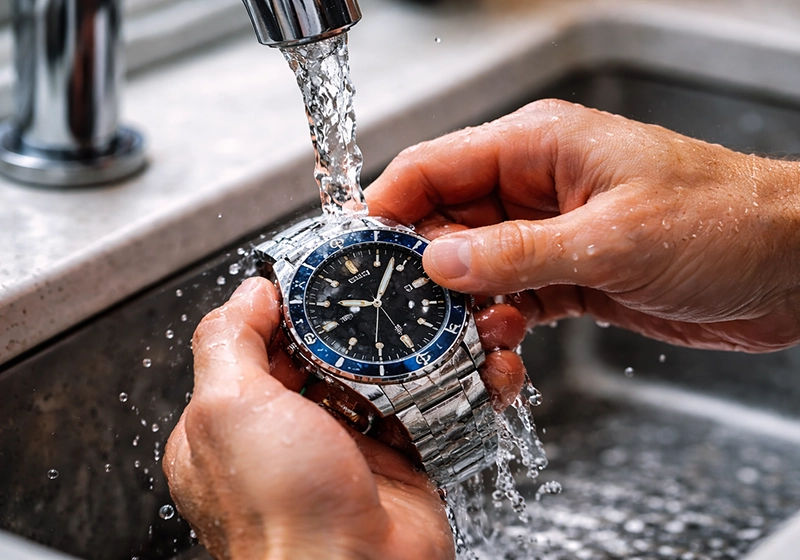
When it comes to cleaning your watch, avoid using soaps, solvents, or cleaning agents as they can degrade the rubber seals essential for water resistance. Instead, clean your watch by rinsing it under fresh water to remove any salt or chlorine, especially after swimming in the sea or a pool. This simple step reduces the corrosive effects these substances can have on your timepiece.
Finally, although some watches are designed to withstand significant water exposure, it’s best to avoid extreme conditions unless absolutely necessary. Diving into water from a height or exposing your watch to rapid temperature changes (like jumping from a hot tub into a cold pool) can compromise its water resistance over time. So, while it’s okay to enjoy your water-resistant watch, a little caution can prevent costly repairs and ensure it lasts for many years to come.
Ensuring Your Timepiece is Ready for Adventures
At Leo Hamel Fine Jewelers, we emphasize the importance of regular servicing and practical care. Our expert team is ready to assist with maintenance or any pre-diving check-ups you might need. Whether you’re looking to secure your existing timepiece or are considering a new purchase, we’re here to help ensure your watch can withstand your wildest adventures. The selection of pre-owned luxury watches changes daily. Browse a selection on our website or visit our showroom to shop for watches that fit your style and needs.